Article
The six people and organisational decisions that can make – or break – your M&A integration.

Article
Read more
2 March 2026
If your M&A integration plan is mostly milestones, you are already accumulating decision debt – the accumulated cost of postponed, avoided, or poorly made choices in an organisation.
During mergers, most value leakage does not stem from a lack of effort but rather decision latency: unclear calls on structure, leadership, ways of working, and system ownership. Decision debt multiplies into duplicated work, culture drift, delayed synergies – and a much harder integration than the one you modelled.
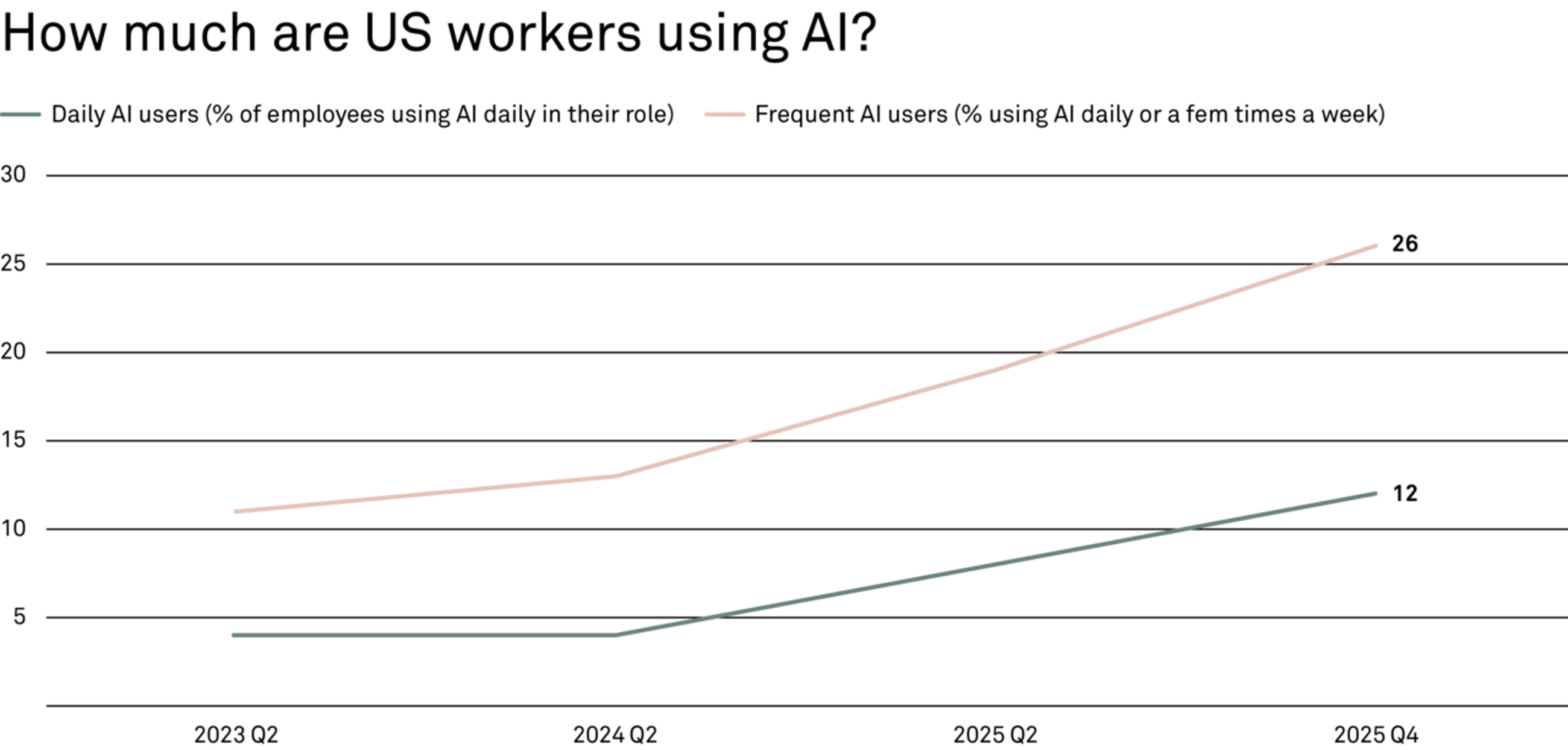
Looking at the numbers, 2026 will magnify that effect. 2025 global announced M&A hit $4.6T (+49% vs. 2024) with 68 mega-deals ($10B+) – a mix that increases complexity, scrutiny, and leadership decision load. At the same time, AI is reshaping how work gets done: Gallup reported daily AI use at 12% and frequent use at 26% in Q4 2025. That means your ‘future organisation’ simply cannot wait until Year 2.
In this article, we explore the six People & Organisation moves that will separate deal closed from deal delivered in 2026.
Before you decide what to integrate, be explicit about how integrated you intend to be. The integration strategy sets the ‘rules of the game’ for every Day 1 / 30 / 100 decision – structure, leadership, culture, systems, and the employee experience.
Do this early:
Why it wins: it converts a strategic idea into actionable guardrails, preventing workstreams from building incompatible plans that create decision debt.
If the deal thesis answers why we bought, the integration thesis answers how value will show up in operations.
Do this early:
Why it wins: it prevents competing narratives and stops local teams from filling the vacuum with incompatible choices.
The fastest way to stall integration is by designing an organisational chart and operating model that preserves legacy power.
Focus on:
Common trap: delaying hard calls ‘until we know more.’ In practice, the delay creates the very uncertainty you want to minimise.
Workforce optimisation is not just cost; it is capability and continuity. In 2026, the winning pattern is precision retention.
What changes:
Practical sequencing: work in waves – stabilise → structure → optimise – so you do not overload the same leaders who you need to deliver the change.
Culture work fails when it stays at the level of values. In 2026, culture must be managed as behaviours + mechanisms – and targeted where it actually changes.
At Implement, we work intentionally with culture hotspots: the specific moments and interfaces where the new culture is either reinforced or undermined, such as:
Make it executable:
Rule: if leaders are not choreographed, the organisation reads that as permission to resist.
Nothing destroys trust faster than payroll errors, conflicting policies, or unclear performance and reward rules. By adding AI‑enabled ways of working, people technology shifts from a back‑office admin system to a platform that actively drives productivity.
Priorities:
If you want speed, you need shared understanding. Onboarding and communications are how you manufacture it at scale.
The scarcest resource in 2026 is not going to be the integration plan but integration capacity: leadership attention, decision speed, and workforce trust. The teams that will win will do so by reducing decision debt early, shifting culture through hotspots (not slogans), and treating onboarding/change/communications as core integration infrastructure.
If you are heading into a deal, most teams benefit from an external perspective to pressure-test the integration thesis, accelerate decision architecture, and de-risk talent/people tech – because the complexity is manageable, but rarely forgiving.